


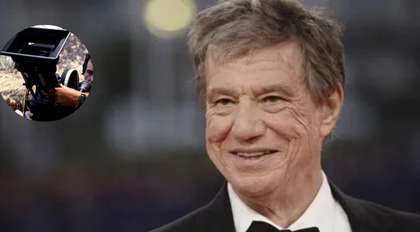
Who Is John McTiernan?
John McTiernan is an American film director best known for directing some of Hollywood’s most memorable action and thriller movies. His work includes iconic films such as Die Hard, Predator, and The Hunt for Red October. Through his distinctive approach to suspense, visual storytelling, and action sequences, McTiernan became one of the most recognizable directors of the late 1980s and 1990s.
- Who Is John McTiernan?
- Early Life and Education
- How John McTiernan Began His Directing Career
- John McTiernan’s Most Famous Movies
- Predator (1987)
- Die Hard (1988)
- The Hunt for Red October (1990)
- Medicine Man (1992)
- Last Action Hero (1993)
- Die Hard with a Vengeance (1995)
- The Thomas Crown Affair (1999)
- The 13th Warrior (1999)
- Rollerball (2002) and Basic (2003)
- What Makes John McTiernan’s Directing Style Unique?
- Suspense and Visual Storytelling
- Strong Characters and Memorable Villains
- Why His Action Scenes Feel Realistic
- John McTiernan’s Legal Troubles and Career Setback
- Awards, Recognition, and Industry Influence
- John McTiernan’s Lasting Legacy in Hollywood
- Conclusion
- FAQs
Unlike filmmakers who rely primarily on spectacular explosions and fast-paced editing, McTiernan built tension through character development, strategic camera movement, carefully designed locations, and compelling conflicts. His films often place ordinary human limitations against extraordinary dangers, giving audiences a reason to care about the characters as well as the action.
Although his career experienced significant setbacks, his most successful movies continue to attract new generations of viewers. His contribution to action filmmaking remains an important part of Hollywood cinema history.
Early Life and Education
John Campbell McTiernan Jr. was born on January 8, 1951, in Albany, New York, United States. He developed an interest in the performing arts and filmmaking before entering the professional film industry. His educational background helped him understand the relationship between performance, visual composition, and storytelling.
McTiernan attended the Juilliard School and later studied at the American Film Institute Conservatory, where he earned a Master of Fine Arts degree in 1975. His education provided a foundation for understanding cinematic techniques and the practical demands of directing.
Film directing requires more than creative ideas. A director must coordinate actors, cinematographers, editors, designers, and production crews while keeping the story focused. McTiernan’s later work demonstrated his ability to bring these different elements together, particularly in complicated action sequences.
How John McTiernan Began His Directing Career
Before establishing himself in Hollywood, McTiernan gained experience working on commercials. This work helped him develop an understanding of visual communication, timing, and the importance of capturing an audience’s attention quickly.
His first feature film as a director was Nomads, released in 1986. The psychological thriller starred Pierce Brosnan and explored mysterious events involving an anthropologist and a group of nomadic outsiders. Although it did not achieve the widespread recognition of McTiernan’s later films, it introduced several elements that would become characteristic of his filmmaking, including suspense, unusual environments, and gradual revelations.
The film provided a starting point for a career that would soon move into major Hollywood productions. His next projects demonstrated that he could manage larger budgets and create commercially successful films without abandoning his interest in tension and visual storytelling.
John McTiernan’s Most Famous Movies
John McTiernan’s filmography includes action thrillers, science-fiction adventures, military dramas, and crime films. Several of his productions became influential examples of their respective genres.
Predator (1987)
Predator was one of the films that established McTiernan as a major Hollywood director. Released in 1987, the science-fiction action thriller stars Arnold Schwarzenegger as Dutch, the leader of an elite military team sent on a dangerous mission in a Central American jungle.
The mission changes dramatically when the team discovers that an unknown creature is hunting them. Their military training and advanced weapons initially make them appear nearly unstoppable, but the mysterious enemy gradually turns the situation into a fight for survival.
McTiernan builds suspense by controlling how much the audience knows about the creature. Instead of revealing every detail immediately, he uses sounds, shadows, environmental clues, and the characters’ reactions to create uncertainty.
The jungle becomes more than a setting. It is a threatening environment that limits visibility and makes every movement potentially dangerous. This combination of science fiction, military action, and survival horror helped make Predator a lasting genre favorite.
Die Hard (1988)
Die Hard is arguably McTiernan’s most influential film. Released in 1988, it stars Bruce Willis as John McClane, a New York police officer who becomes trapped inside a Los Angeles skyscraper during a hostage takeover.
McClane must confront a group of armed criminals led by Hans Gruber, portrayed by Alan Rickman. With limited resources and little assistance, he relies on intelligence, improvisation, and determination to protect the hostages.
One of the film’s greatest strengths is its use of space. The skyscraper’s offices, stairwells, elevators, and ventilation shafts shape the action and create new challenges for the protagonist. Each location contributes to the story instead of serving as a meaningless backdrop.
McClane is also a relatable action hero. He becomes exhausted, suffers injuries, makes mistakes, and experiences fear. These weaknesses make his achievements more believable and help audiences connect with his struggle.
The combination of suspense, humor, memorable dialogue, and a compelling antagonist helped establish Die Hard as a defining action movie. Its influence can still be seen in films that place a vulnerable protagonist inside a dangerous, confined environment.
The Hunt for Red October (1990)
With The Hunt for Red October, McTiernan demonstrated that his directing skills extended beyond conventional action movies. Based on Tom Clancy’s novel, the film follows a Soviet submarine captain whose unexpected decisions create an international crisis.
Sean Connery plays Captain Marko Ramius, while Alec Baldwin portrays CIA analyst Jack Ryan. As American intelligence officers attempt to understand the captain’s intentions, the possibility of a military confrontation creates tension between competing powers.
The film relies heavily on suspense, technical details, and strategic decision-making. Much of its action takes place inside submarines, where narrow corridors, limited visibility, and the threat of detection make even small movements significant.
McTiernan turns these limitations into advantages. Rather than depending on constant explosions, he allows conversations, sonar signals, and uncertain intelligence to drive the narrative. The result is a tense political thriller that demonstrates his ability to manage complex stories and ensemble casts.
Medicine Man (1992)
Medicine Man presented a different side of McTiernan’s directing style. The film stars Sean Connery as a scientist working in a remote rainforest who searches for a potential medical breakthrough.
The story explores scientific ambition, environmental destruction, and the challenges of conducting research in an unfamiliar environment. Lorraine Bracco plays a research colleague who becomes involved in the scientist’s work and personal struggles.
Unlike McTiernan’s most famous action films, Medicine Man places greater emphasis on relationships, natural landscapes, and ethical questions. Although it did not reach the same level of success as Die Hard, it demonstrated his willingness to explore stories outside the action genre.
Last Action Hero (1993)
Last Action Hero takes a humorous approach to Hollywood action movies. Arnold Schwarzenegger stars as Jack Slater, a fictional action hero whose world becomes connected to reality through a magical movie ticket.
The film plays with familiar action conventions, exaggerating the invincible heroes, dramatic confrontations, and predictable situations commonly found in blockbuster cinema. It also examines the difference between movie logic and real-world consequences.
Despite its ambitious concept, the film performed poorly at the box office and received mixed reviews. Nevertheless, its self-aware approach to action storytelling has attracted interest from viewers who appreciate films that question their own genre conventions.
Die Hard with a Vengeance (1995)
McTiernan returned to the Die Hard franchise with Die Hard with a Vengeance, starring Bruce Willis, Samuel L. Jackson, and Jeremy Irons.
The story follows John McClane as he attempts to stop a criminal scheme involving a series of dangerous challenges across New York City. Unlike the original film, which primarily takes place inside one skyscraper, the sequel uses a much broader urban environment.
The partnership between McClane and Zeus Carver, played by Jackson, adds humor and conflict to the story. Their contrasting personalities create entertaining dialogue while their investigation drives the action forward.
The film demonstrated that a successful sequel could retain a familiar protagonist while introducing new locations, relationships, and narrative challenges.
The Thomas Crown Affair (1999)
The Thomas Crown Affair is a stylish crime thriller starring Pierce Brosnan and Rene Russo. Brosnan plays a wealthy art collector suspected of stealing a valuable painting, while Russo portrays an insurance investigator determined to uncover the truth.
The film combines mystery, romance, deception, and sophisticated visual presentation. Instead of relying primarily on physical confrontations, it builds tension through psychological games and the changing relationship between its central characters.
This production highlights McTiernan’s versatility as a director. He could move from intense military action to a sophisticated crime story while maintaining control over pacing, atmosphere, and audience expectations.
The 13th Warrior (1999)
The 13th Warrior is a historical adventure film starring Antonio Banderas as an Arab traveler who becomes involved with a group of Norse warriors. Together, they confront a mysterious enemy threatening a remote settlement.
The film combines adventure, mythology, and horror elements. Its remote landscapes and physical confrontations create a different cinematic experience from McTiernan’s urban thrillers.
Despite its ambitious production, the movie struggled commercially. It remains one of the less successful major projects in his filmography, but it illustrates his interest in unfamiliar environments and survival-driven storytelling.
Rollerball (2002) and Basic (2003)
Rollerball attempted to modernize a dystopian science-fiction concept centered on a violent sport controlled by powerful commercial interests. The film explored entertainment, corporate influence, and the manipulation of audiences, but its reception was largely negative.
In 2003, McTiernan directed Basic, a military mystery starring John Travolta and Samuel L. Jackson. The story follows an investigation into a training exercise that ends in disaster. Conflicting accounts and hidden motives make it difficult to determine what actually happened.
Neither film matched the impact of his earlier successes. Nevertheless, they represent important chapters in understanding the changing direction of his career.
What Makes John McTiernan’s Directing Style Unique?
McTiernan’s most successful films share a strong understanding of suspense, character motivation, and spatial storytelling. He often places characters in environments that restrict their choices, forcing them to think creatively and respond to increasingly difficult situations.
His action sequences are generally connected to the narrative. Characters do not simply move from one spectacular set piece to another; their decisions create consequences that influence what happens next.
Suspense and Visual Storytelling
Suspense is one of the most recognizable features of McTiernan’s directing style. He understands that audiences do not need to see every threat immediately. Sometimes an unexplained sound, a suspicious movement, or a character’s uncertain expression can create more tension than a direct confrontation.
His use of locations strengthens this approach. The skyscraper in Die Hard, the jungle in Predator, and the submarines in The Hunt for Red October each create different physical and psychological challenges.
These environments influence the characters’ decisions and help audiences understand the stakes. The setting becomes an active part of the storytelling rather than simply providing visual decoration.
Strong Characters and Memorable Villains
McTiernan’s best films feature protagonists who possess identifiable strengths and weaknesses. John McClane is resourceful but vulnerable, while Dutch in Predator must adapt when his military advantages no longer guarantee survival.
His villains also contribute significantly to the tension. Hans Gruber stands out because he combines intelligence, confidence, and strategic thinking. He is dangerous not only because of his weapons but also because he understands how to manipulate people and situations.
Strong opposition gives the protagonist something meaningful to overcome. When both sides can make intelligent decisions, the conflict becomes more engaging and unpredictable.
Why His Action Scenes Feel Realistic
McTiernan’s most effective action scenes establish clear physical relationships between characters and their surroundings. Viewers can generally understand where the danger is coming from, what the protagonist needs to accomplish, and why a particular obstacle matters.
His characters also experience physical consequences. They become tired, sustain injuries, lose equipment, and must improvise when their plans fail.
This approach creates a sense of vulnerability even in larger-than-life stories. The result is action that feels connected to human effort rather than relying entirely on visual spectacle.
John McTiernan’s Legal Troubles and Career Setback
McTiernan’s professional life was significantly affected by legal proceedings connected to private investigator Anthony Pellicano. The investigation involved illegal wiretapping and false statements to federal investigators.
McTiernan pleaded guilty to offenses involving false statements and perjury in connection with the case. He served approximately ten months in federal prison from April 2013 to February 2014, followed by a period of house arrest.
The legal proceedings had serious consequences for his career. A director who had previously worked on major Hollywood productions faced substantial professional difficulties, and his opportunities within the mainstream film industry became more limited.
These events are an important part of his biography, but they should be considered separately from an evaluation of his films. His professional achievements and his legal conduct represent different aspects of his life, both of which contribute to a complete understanding of his career.
Awards, Recognition, and Industry Influence
McTiernan’s reputation comes largely from the continuing popularity and influence of his most successful movies. Die Hard, Predator, and The Hunt for Red October remain prominent examples of effective action and suspense filmmaking.
His work demonstrates how strong premises, carefully structured scenes, memorable characters, and controlled pacing can create films that remain entertaining long after their original release.
His influence is not limited to awards or box-office results. Filmmakers and film enthusiasts continue to study his approach to confined locations, escalating danger, and visual clarity. These techniques offer useful lessons for anyone interested in directing action, writing thrillers, or constructing suspenseful stories.
John McTiernan’s Lasting Legacy in Hollywood
John McTiernan occupies an important place in the history of modern action cinema. His most successful films helped establish a style of filmmaking that combines large-scale entertainment with understandable geography, meaningful character choices, and carefully managed suspense.
Die Hard remains a particularly influential example of how a confined setting can generate escalating action. Predator demonstrates how uncertainty can transform a familiar military mission into a survival thriller, while The Hunt for Red October shows that suspense can emerge from strategy and incomplete information rather than constant physical conflict.
His career also demonstrates that professional success can be disrupted by creative disappointments and personal decisions. Although his later years did not reproduce the commercial achievements of his most celebrated period, his strongest films continue to define his contribution to Hollywood.
For aspiring directors and screenwriters, his work offers a valuable lesson: audiences remember action not simply because it is spectacular, but because they understand the characters, recognize the danger, and care about the outcome.
Conclusion
John McTiernan is one of the influential directors associated with Hollywood’s most memorable action and thriller films. From Predator and Die Hard to The Hunt for Red October and The Thomas Crown Affair, his career demonstrates an impressive ability to work across genres while maintaining a strong focus on suspense, visual storytelling, and character-driven conflict.
Although legal troubles and several disappointing productions affected his professional journey, his most successful movies remain widely discussed and enjoyed. His approach to action direction continues to offer valuable lessons in pacing, atmosphere, character development, and cinematic clarity. For anyone interested in Hollywood history, John McTiernan’s career provides a compelling example of both the creative possibilities and the challenges of working in the film industry.
FAQs
1. Who is John McTiernan?
John McTiernan is an American film director known for directing major Hollywood productions, including Die Hard, Predator, and The Hunt for Red October. He became especially prominent during the late 1980s and 1990s.
2. What are John McTiernan’s most famous movies?
His best-known movies include Predator (1987), Die Hard (1988), The Hunt for Red October (1990), Last Action Hero (1993), Die Hard with a Vengeance (1995), and The Thomas Crown Affair (1999).
3. Did John McTiernan direct the original Die Hard?
Yes. McTiernan directed the original Die Hard, released in 1988 and starring Bruce Willis as police officer John McClane. He also directed the third film in the franchise, Die Hard with a Vengeance, released in 1995.
4. Why did John McTiernan go to prison?
McTiernan served a federal prison sentence after pleading guilty to offenses involving false statements to federal investigators and perjury connected to the Anthony Pellicano investigation.
5. What is Joh McTiernan’s contribution to action cinema?
McTiernan helped popularize action filmmaking that combines suspense, clear visual storytelling, strong characters, and practical use of locations. His best-known movies remain influential examples of how action and narrative tension can work together.